

4. Puzzle types and when they fit
Puzzle types and when they fit
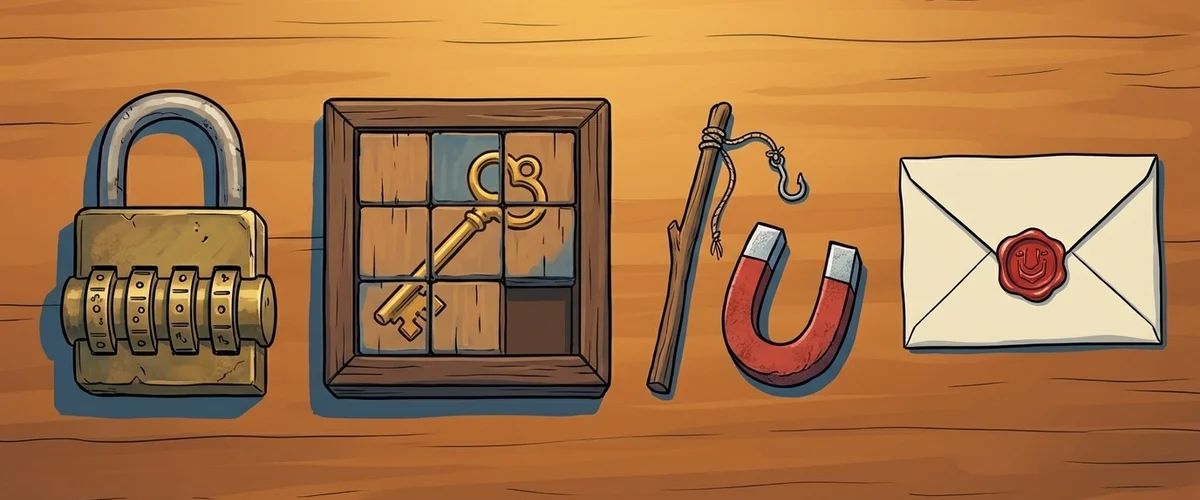
| Type | Example | Strength | In Visionaire |
|---|---|---|---|
| Use an item | Key on door | Instantly understandable | Action on the target, execution type "Executed command on object" |
| Combine items | Fishing rod and magnet make a magnet rod | Feels clever | Action on the item with a combined command |
| Observation | A picture hangs crooked, a safe is behind it | Rewards attention | Look text as a hint, a condition makes a new object visible |
| Dialog | Talk the guard round | Brings characters into play | Dialog options tied to conditions |
| Use a character | The cat distracts the caretaker | Living world | Item on character, then animation and a change in the scene |
| Order and timing | Lights off first, then open the door | Tension | Values count steps, "If value" checks the order |
| Mini puzzle | Combination lock, sliding puzzle | Variety | A scene of its own without a character, templates in the wiki under Templates and demo projects |
The right mix
- Alternate the types. Five item puzzles in a row get tiring.
- Choose the type based on the story, not the other way round. A detective solves observation puzzles, a diplomat solves dialog puzzles.
- Use mini puzzles sparingly. They interrupt the flow and can't be solved with the logic of the game world, only with their own rules.
Rule to remember
The puzzle type follows from character and story. Variety keeps players awake.
Your task
Assign every puzzle in your game to a type. If one type makes up more than half, swap one out.



