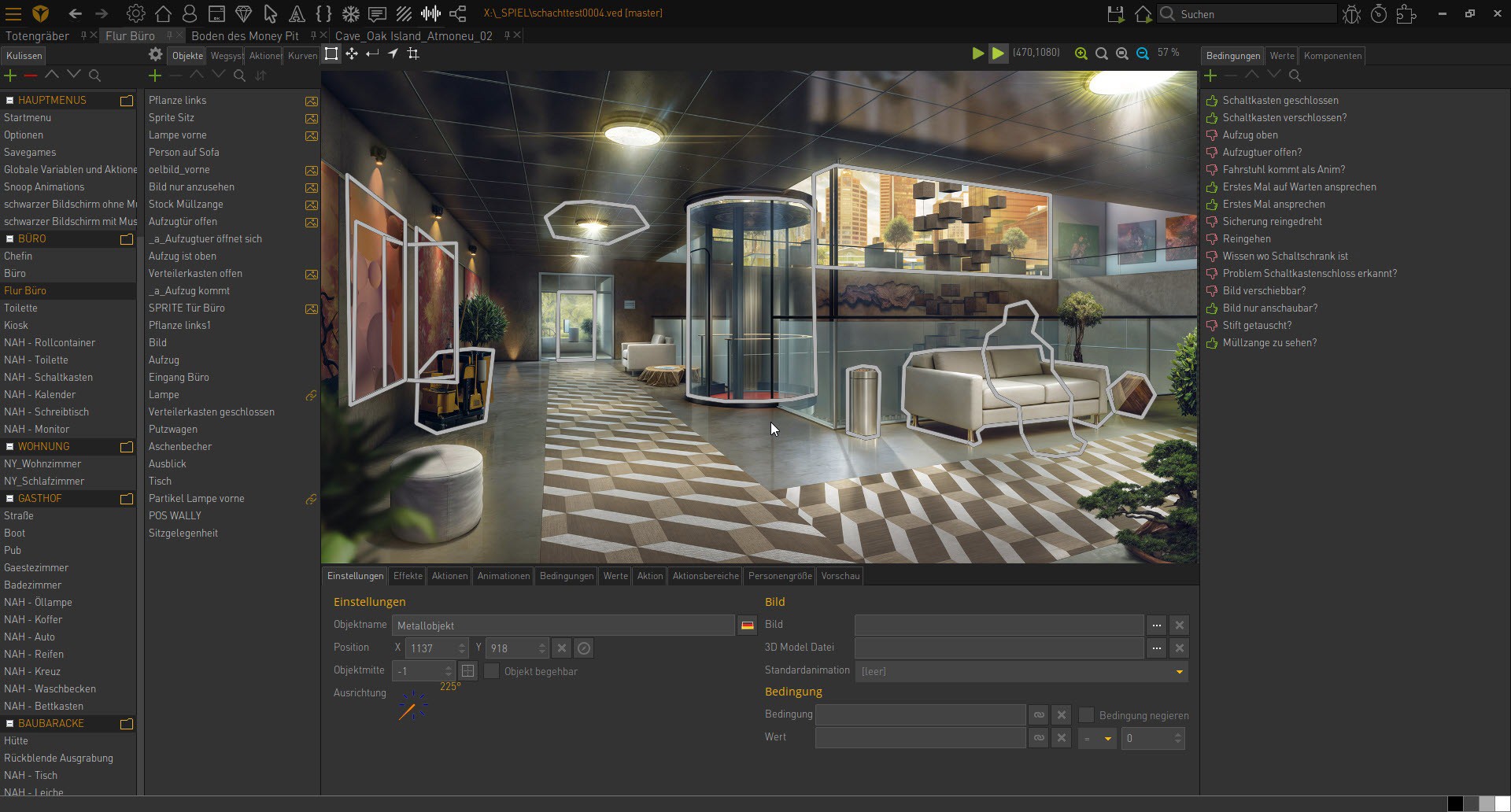
Creating an engaging adventure game involves much more than designing beautiful environments and writing an interesting story. Behind every memorable gaming experience is a combination of thoughtful game mechanics, smooth interactions, reliable systems, and well-planned software development.
For developers working with tools like Visionaire Studio, creating point-and-click adventures offers exciting opportunities to combine storytelling, puzzles, character interactions, and immersive environments.
However, as a project becomes more complex, maintaining a balance between creativity and technical quality becomes increasingly important.
1. Building Interactive Worlds That Feel Alive
One of the most important elements of an adventure game is its environment.
Players should feel encouraged to explore their surroundings, interact with objects, discover hidden details, and experiment with different possibilities.
Some important elements include:
Interactive objects that respond naturally to player actions.
Well-designed scenes with clear visual direction.
Character animations that make interactions feel realistic.
Environmental details that support the storyline.
Smooth transitions between different locations.
Even small details, such as an object changing its appearance after interaction, can make the gaming experience more rewarding.
2. Creating Puzzles That Challenge Players
Puzzle design is another essential part of adventure games.
A good puzzle should make players think without making them feel frustrated. Inventory combinations, environmental clues, dialogue choices, and multi-step interactions can all contribute to interesting gameplay.
Developers should consider three things when designing puzzles:
Clarity: Players should have enough information to understand what they can interact with.
Consistency: Puzzle logic should follow rules that make sense within the game world.
Reward: Solving a puzzle should provide a meaningful sense of progress.
Testing puzzles with people who are unfamiliar with the development process can also reveal confusing interactions that developers might otherwise overlook.
3. Why Technical Quality Matters
A creative idea can lose its impact when the underlying game systems are unreliable.
As adventure games grow, developers may encounter challenges involving:
Complex interaction logic.
Inventory and object-state management.
Dialogue conditions and branching conversations.
Performance optimization.
Save and load functionality.
Compatibility across different platforms.
This is where good software engineering practices become valuable.
Clean code, structured architecture, proper testing, and clear documentation help make projects easier to maintain and expand.
For more advanced projects, scripting and custom development can also provide additional flexibility when standard visual tools are not sufficient.
4. The Growing Role of Modern Software Development
The gaming industry is increasingly benefiting from modern software engineering approaches.
Technologies such as AI-assisted development, automated testing, cloud infrastructure, and data-driven applications are creating new opportunities for development teams.
Companies like Bitrupt work in areas including custom software development, AI and data engineering, web and mobile applications, cloud solutions, and quality engineering.
These capabilities highlight the wider role of software engineering in building reliable digital products, including applications where performance, usability, and maintainability are essential.
5. What Should Indie Developers Focus On?
Independent developers often work with limited budgets and small teams. This makes planning and prioritization especially important.
A practical approach is to:
Start with a small playable prototype.
Test the main gameplay mechanics before expanding the project.
Keep scripts and game logic organized.
Optimize assets and performance regularly.
Collect feedback from real players.
Improve the experience through continuous testing.
Building a smaller but polished game can often create a stronger impression than developing a large project with unfinished mechanics.
Let's Hear From the Community!
I'm interested in hearing from developers who are working with Visionaire Studio or other adventure game development tools.
What do you think is the biggest challenge when developing a high-quality point-and-click adventure game?
Designing interesting puzzles and interactions?
Managing complex Lua scripts and game logic?
Creating engaging dialogue and storytelling?
Maintaining performance and technical stability?
Balancing development time with creative ideas?
Also, what development practices or tools have made the biggest difference in your projects?
I'd love to hear your experiences, ideas, and recommendations. Every developer approaches these challenges differently, and sharing practical knowledge can help everyone create better games.